Global – Soil Security as Shared Ground
From one landscape to the whole planet
Some questions cannot be answered in one country. How much soil does the world have left in good condition? Who is responsible for it? How do we value something that takes centuries to form and a few seasons to lose?
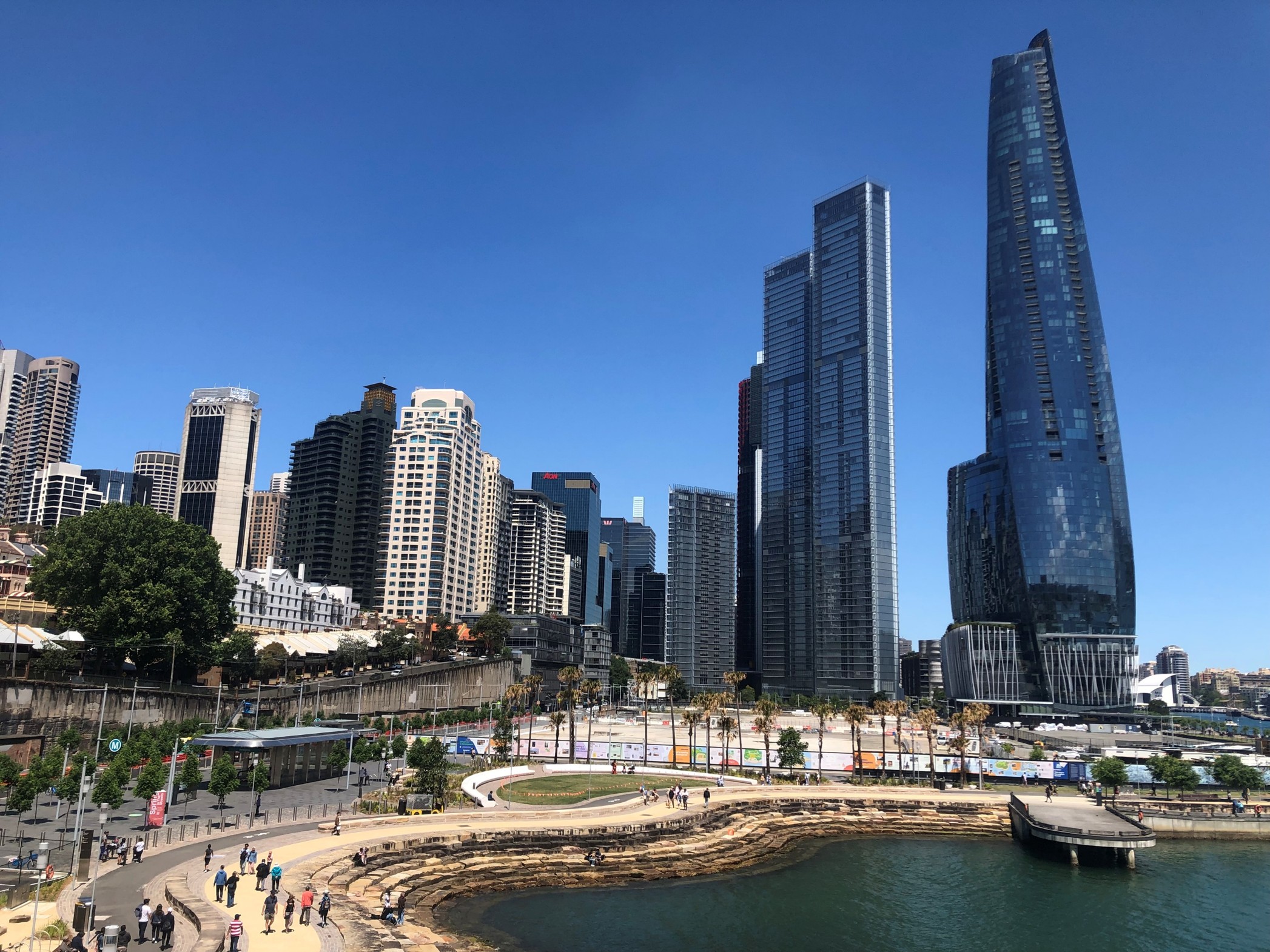
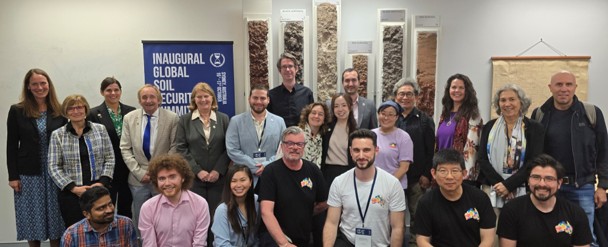
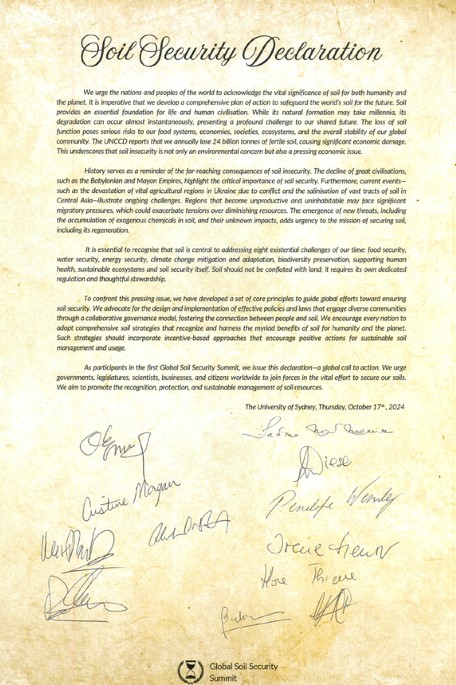
In Australia, RafikiArdhi team members worked on exactly these questions. We served on the Secretariat of Aroura, the soil and soil security think tank in Sydney, during its launch and the first Global Soil Security Summit, where the Soil Security Declaration was signed. We co-authored two of Aroura’s publications and took part in projects that looked at soil at the scale of the planet.
Soil security
Soil security asks a simple question with a complicated answer: is the soil able to keep providing what people and ecosystems need from it? Answering it means looking at more than the soil itself. It brings together the condition of the soil, what it is capable of, its value, how connected people are to it, and the policies and laws that govern how it is used.
That framing did not changed how we work. A soil map or a carbon stock is only part of the picture. The same soil can be secure in one place and at risk in another, depending on who depends on it and how it is managed. This is how we always worked.
What did change is that one place cannot decide these standards for another, and local knowledge is often the most useful tool.
Thinking globally, working locally
Global projects can feel far removed from a farm, a catchment or a backyard. For us they did the opposite. They showed that the same ideas apply at every scale: know the soil, know the people who depend on it, and make the knowledge useful to them.
That thinking runs through the other places we have worked and through the research tools we share freely. The scale changes; the responsibility does not. We continue to support projects globally from young scientists to large scale projects:
- Global Covid-19
- * Global phySplines
- Pakistan - see research
- Bangladesh - modeling shoreline change (MSc student, in progress)
- China - see research
- Japan - global climate models (NDA)
- World Bank - carbon credit feasibility (NDA)